
Welcome to this lesson
Crochet is made by drawing yarn through loops with a hook. You work one stitch at a time, and the active loop stays on your hook while the fabric grows beneath it. There is no need to memorize a whole pattern today; first, learn to notice where the yarn and loops are.
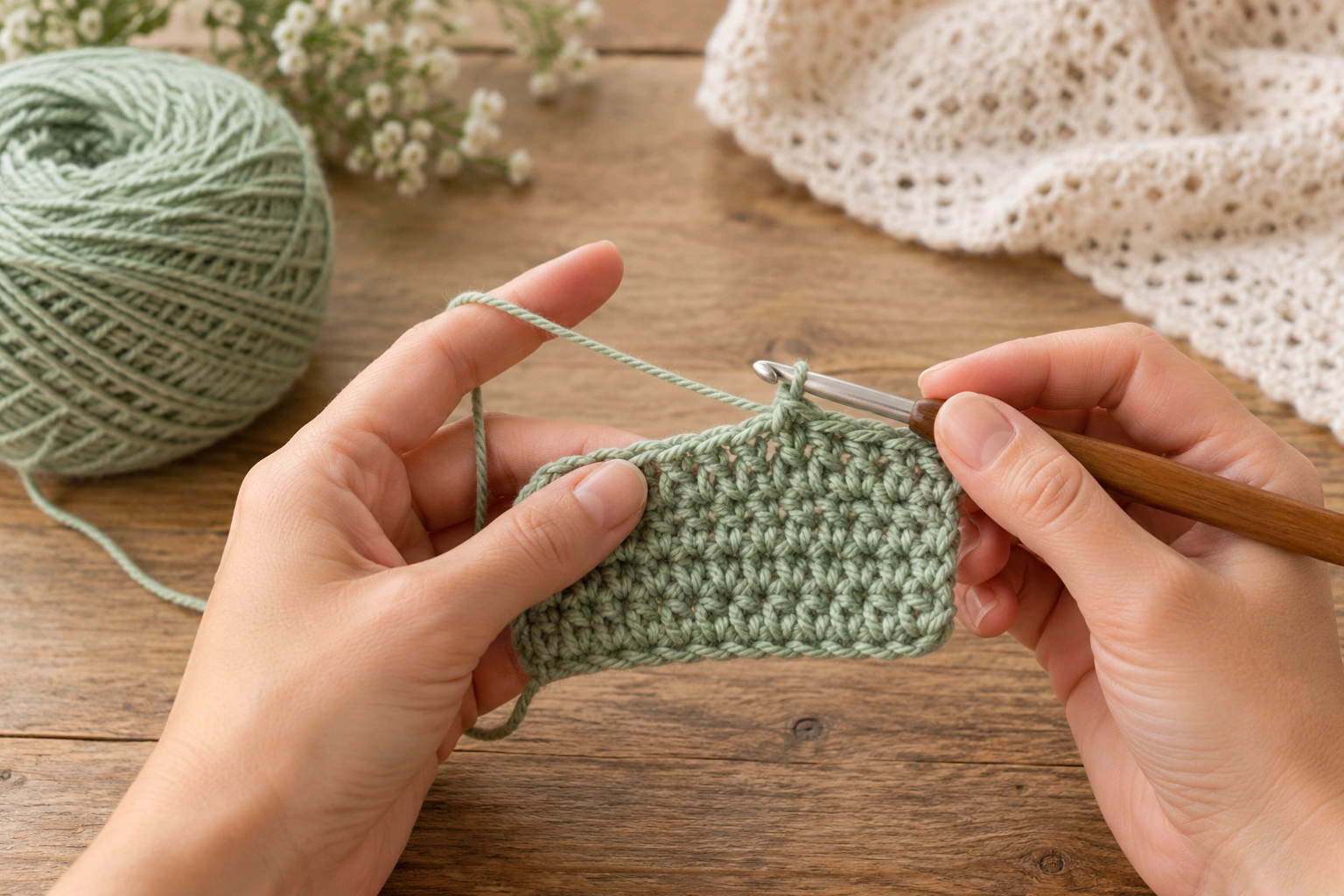
Follow along
Work through the steps
- 01
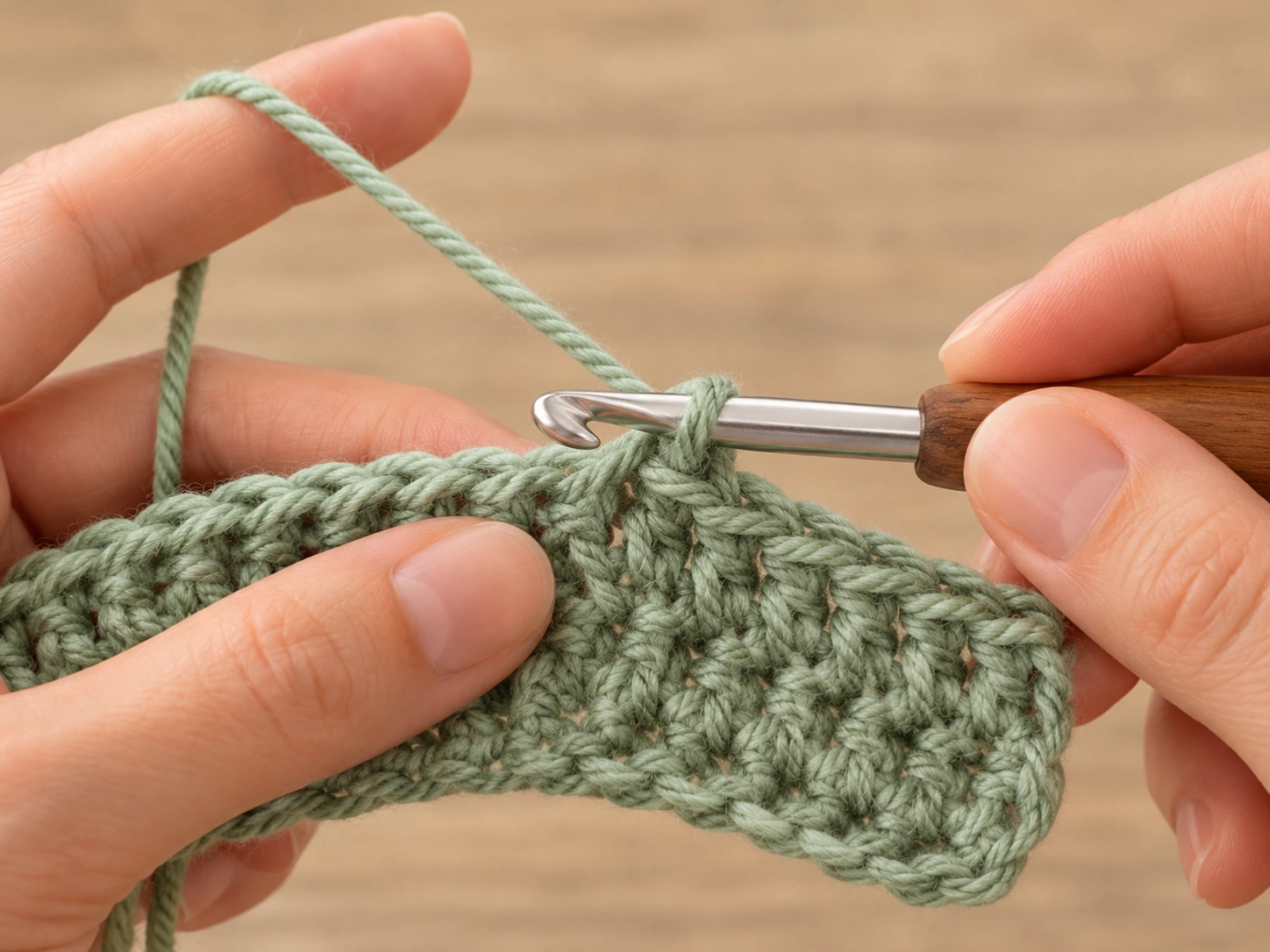
Find the working yarn
The working yarn is the strand connected to the ball. It feeds new yarn to the hook. The short loose end is the tail; it is used to secure a beginning knot and is woven in at the end.
- 02
Notice the active loop
The loop resting on the hook is the active loop. It is not a completed stitch by itself. Keep it on the hook between stitches so your work does not unravel.
- 03
Build fabric from stitches
A stitch is formed by pulling yarn through loops in a repeatable way. In rows, new stitches are made into the top loops of the row below. In rounds, stitches join around a center or an existing ring.
- 04
Expect a learning curve
Your first chain may twist or vary in size. That is normal. Smooth, even tension comes with practice; the first goal is understanding the path of the yarn, not making perfect fabric.
Common snags and fixes
Calling every loop a stitch
Separate the active loop on the hook from completed stitches below it. The active loop is held ready for the next movement.
Pulling the yarn tight to control it
Use a relaxed hold. A loop should slide on the hook without slipping off; tight gripping makes it harder to insert the hook.
Helpful tips
- Use smooth, light-coloured yarn for your first practice; textured or very dark yarn can hide the loops.
- Work in a well-lit spot and pause whenever you lose track of the active loop.
Quick knowledge check
What remains on your hook between completed stitches?
Ready to continue?
Mark this lesson complete
Your course progress is saved in this browser. You can return and review any lesson.